Call US :- +91 9098562080
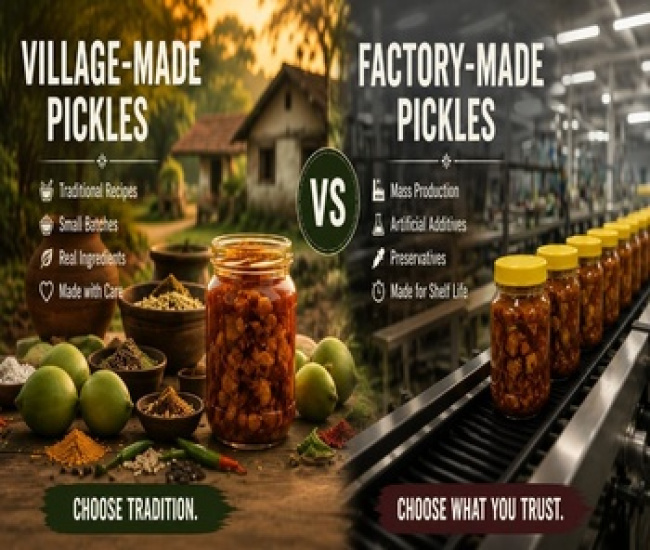
Village Pickle vs Factory-Made Pickle – Which Is Better ?
Published on 16 Aug 2026
Village-Made Pickles vs Factory-Made Pickles: What's the Real Difference?
Quick Summary
Village-made pickles are prepared in small batches using traditional family recipes, fresh seasonal ingredients, and cold-pressed mustard oil, while factory-made pickles are produced on a larger scale using standardized processes designed for consistency, extended shelf life, and wider distribution. Understanding these differences can help you choose the pickle that best matches your taste, ingredient preferences, and buying priorities.
Introduction
Walk into any grocery store today, and you'll find shelves filled with pickle jars in every flavor imaginable, mango, lemon, mixed vegetable, green chilli, and more. While factory-made pickles are widely available and convenient, many people still search for homemade village achar because of its traditional preparation and authentic taste.
The difference goes far beyond the label on the jar. It starts with the ingredients, continues through the preparation process, and shapes the final flavor, texture, and overall experience of what ends up on your plate. Village-made pickles are typically prepared by families using recipes passed down through generations, while factory-made pickles are manufactured at scale using standardized, automated processes.
Neither option is inherently better for everyone. Factory-made pickles offer convenience and predictable flavor, while village-made pickles appeal to those who value traditional recipes, regional flavors, and small-batch craftsmanship.
In this guide, we'll compare village-made and factory-made pickles across ingredients, preparation methods, taste, traditional recipes, and buying considerations, helping you make an informed choice the next time you shop for achar.
What Are Village-Made Pickles?
Village-made pickles are homemade pickles prepared by families or small producers using traditional recipes, seasonal ingredients, and time-tested preparation methods. Instead of being manufactured in large factories, they're crafted in home kitchens where every batch receives individual attention.
Many recipes have been preserved within families for decades, reflecting regional traditions and local ingredients. Fresh mangoes, lemons, green chillies, vegetables, mustard oil, and aromatic spices are carefully selected before being prepared in small batches.
For many households across India, village-made pickles are more than a condiment, they're part of a family tradition that continues to bring authentic homemade flavors to everyday meals.
Village-Made Pickles vs Factory-Made Pickles: Quick Comparison
| Village-Made Pickles | Factory-Made Pickles |
| Prepared in small batches | Produced on a large scale |
| Traditional family recipes | Standardized commercial recipes |
| Handmade preparation | Automated manufacturing processes |
| Fresh, seasonal ingredients | Bulk ingredient sourcing |
| Cold-pressed mustard oil is commonly used | Refined or blended oils are commonly used |
| Regional flavor variations | Consistent flavor across batches |
| Traditional curing and maturation methods | Preservatives and standardized preservation methods for extended shelf life |
| Often packed in glass jars | Commonly packed for large-scale retail distribution |
While both types of pickles can be enjoyable, they're created with different priorities. Village-made pickles emphasize traditional preparation and craftsmanship, while factory-made pickles focus on consistency, scalability, and wider distribution.
1. Ingredients: Fresh Selection vs Large-Scale Sourcing
The quality of any pickle begins with its ingredients.
Village-made pickles are commonly prepared using fresh, seasonal fruits and vegetables selected at the right stage of ripeness. Traditional spices such as mustard seeds, fenugreek, turmeric, fennel, and red chilli powder are carefully blended to create balanced flavor. Many homemade recipes also use cold-pressed mustard oil, which has long been preferred in traditional Indian pickle making for both its distinctive taste and natural preservation properties.
Commercial manufacturers typically source ingredients in much larger quantities to support continuous production. Since products need to remain consistent across thousands of jars, sourcing and processing follow standardized procedures. Depending on the brand and recipe, some commercially produced pickles may also include approved preservatives or food additives to maintain product stability throughout their intended shelf life.
The result is two different approaches—one centered on traditional preparation and carefully selected ingredients, and the other designed to deliver consistent quality across large-scale production.
2. Traditional Preparation vs Industrial Production
One of the biggest differences between village-made and factory-made pickles lies in how they're prepared.
Village-made pickles are often prepared gradually, following traditional methods developed over generations. Ingredients are carefully cleaned, sun-dried where required, mixed with aromatic spices, and allowed to mature naturally over time before they're ready to enjoy. Every step receives individual attention because production happens in relatively small quantities.
This is the same tradition our family continues today. Our recipes began with Shakuntla Bai in Babulda, Madhya Pradesh, where every batch is still prepared in small quantities using traditional family methods.
Factory-made pickles are produced using automated equipment designed for efficiency and uniformity. Modern manufacturing enables companies to prepare, package, and distribute thousands of jars while maintaining consistent quality standards across every production batch.
Both approaches serve different purposes, but they represent two very different philosophies of food preparation—traditional craftsmanship and large-scale manufacturing.
3. Small-Batch Preparation: Why It Matters
Small-batch preparation is one of the defining features of village-made pickles.
Preparing fewer jars at a time allows greater attention during ingredient selection, spice blending, oil distribution, and overall quality control. Rather than focusing on production volume, each batch receives the time and care needed to maintain the family's traditional recipe.
Natural variation between batches is also common. Slight differences in seasonal ingredients or spice intensity give every preparation its own character while preserving the authentic taste that homemade pickles are known for.
Large-scale production, by comparison, is designed to minimize variation. Recipes, ingredient measurements, and production methods are carefully standardized so customers receive a familiar flavor regardless of when or where they purchase the product.
For people who appreciate authentic regional flavors, this individuality is often one of the biggest reasons for choosing homemade village achar.
4. Taste and Texture
Taste is often where people notice the biggest difference.
Village-made pickles reflect the natural character of the ingredients used. Because preparation methods, spice blends, ingredient selection, and maturation time can vary slightly, each batch develops its own depth of flavor and texture. This individuality is part of what many people enjoy about traditional homemade pickles.
Factory-made pickles are designed to deliver a consistent eating experience. Standardized recipes and controlled manufacturing processes help ensure that every jar offers a similar flavor profile, making them a reliable option for customers who prefer predictability.
Ultimately, taste is a matter of personal preference. Some people appreciate the consistency of commercial products, while others enjoy the rich, handcrafted character that comes from traditional village-made pickles.
5. Traditional Recipes and Regional Flavors
India is home to countless pickle traditions, each shaped by local ingredients, climate, and family preferences.
Village-made pickles often preserve these regional recipes, allowing unique spice combinations and preparation techniques to continue across generations. A mango pickle from one village may taste noticeably different from one prepared in another region because every family develops its own recipe over time.
These recipes aren't usually written in detailed manuals. Instead, they're passed down through experience, observation, and years of practice, making every family's achar unique.
Factory-made products generally follow standardized formulas designed to appeal to a broader audience. This creates a familiar flavor profile across markets but naturally reduces some of the regional variation found in homemade pickles.
Traditional family recipes remain one of the biggest reasons people continue to seek out authentic village achar.
6. The Role of Mustard Oil
Mustard oil deserves special mention because it plays such an important role in traditional Indian pickle making.
Cold-pressed mustard oil isn't simply a cooking medium—it contributes to the pickle's distinctive aroma, bold flavor, and traditional preservation process. For generations, Indian households have relied on mustard oil while preparing homemade achar because of the unique taste it brings to every batch.
Many commercially produced pickles use refined vegetable oils or blended oils depending on their recipe and production requirements. This can create a different flavor profile compared to traditional homemade pickles prepared with cold-pressed mustard oil.
If you've ever noticed that a homemade village pickle has a richer aroma and more pronounced traditional taste, the choice of oil is often one of the contributing factors.
7. Health and Nutrition
The nutritional profile of any pickle depends on its ingredients, preparation method, and the quantity consumed. When prepared using fresh ingredients, traditional spices, and quality oils, homemade village pickles can be a flavorful addition to a balanced diet.
Traditional Indian pickles often rely on ingredients such as mustard oil, salt, and spices for preservation, while some recipes may also undergo a natural curing or maturation process. Spices like turmeric, fenugreek, mustard seeds, and fennel not only contribute to flavor but have long been valued in Indian cooking.
Commercially produced pickles are formulated to deliver consistent quality and extended shelf life. Depending on the brand and recipe, they may contain refined oils, approved preservatives, or food additives to maintain stability throughout storage and distribution.
If you prefer products made with simple, recognizable ingredients, taking a few moments to read the ingredient label can help you choose a pickle that matches your preferences and dietary needs.
8. Packaging and Preservation
Proper packaging plays an important role in maintaining the quality of pickles.
Village-made pickles are commonly packed in glass jars, which are widely preferred for storing oil-based pickles because glass is non-reactive and helps preserve the natural flavor and aroma of the ingredients. With proper storage and the use of clean, dry utensils, homemade pickles can retain their quality for several months.
Factory-made pickles are packaged using automated filling and sealing systems designed for large-scale distribution. Depending on the manufacturer, products may be packed in glass or food-grade plastic containers to ensure durability during transportation and retail storage.
Regardless of how a pickle is prepared, storing it in a cool, dry place and avoiding moisture contamination helps maintain its taste and quality over time.
9. How to Choose Authentic Homemade Pickles
If you're planning to buy homemade pickles online, keeping a few simple factors in mind can help you make a more informed decision.
- Look for brands that clearly explain how and where their pickles are prepared.
- Read the ingredient list and choose products made with recognizable, natural ingredients.
- Check whether the pickles are prepared in small batches rather than mass-produced.
- Look for information about family recipes or regional traditions behind the product.
- Read genuine customer reviews to understand flavor, texture, and overall quality.
- Choose transparent brands that openly share details about their preparation methods and ingredients.
These simple checks can help you identify authentic homemade pickles while giving you greater confidence in your purchase.
10. Are Village-Made Pickles Worth Buying?
If you appreciate authentic regional flavors, traditional recipes, and homemade craftsmanship, village-made pickles can be an excellent choice. Their appeal lies not only in the ingredients used but also in the care and attention given to every batch during preparation.
On the other hand, factory-made pickles are well suited to people looking for convenience, wide availability, consistent flavor, and longer shelf life.
Rather than one option being universally better than the other, the right choice depends on what matters most to you. Understanding the differences in preparation methods, ingredients, and flavor profiles allows you to select a pickle that aligns with your personal preferences.
So, Which One Should You Choose?
The answer depends on what you're looking for.
If convenience, extended shelf life, and consistent flavor are your priorities, factory-made pickles may be a suitable option.
If you value traditional preparation methods, regional recipes, fresh ingredients, and the craftsmanship that comes with small-batch production, village-made pickles offer a different experience that's deeply connected to India's culinary heritage.
At Village Aachar, our family continues the pickle-making tradition started by Shakuntla Bai in Babulda, Madhya Pradesh. Every jar is prepared in small batches using our family's recipes, bringing authentic homemade flavors from our kitchen to yours.
Final Thoughts
Every jar of pickle tells a story.
Factory-made pickles are designed for consistency, convenience, and large-scale production, while village-made pickles preserve family traditions, regional recipes, and handcrafted preparation methods. Neither approach is right or wrong—they simply cater to different preferences and priorities.
By understanding the differences in ingredients, preparation methods, flavor, and buying considerations, you can confidently choose the pickle that best matches your taste and lifestyle.
Whether you enjoy homemade mango pickle, lemon pickle, mixed pickle, or green chilli pickle, choosing a product that reflects the quality and tradition you value can make every meal even more enjoyable.
Taste the Tradition
If you're looking for authentic homemade village achar prepared in small batches using traditional family recipes, explore our collection of homemade mango pickle, lemon pickle, mixed pickle, and green chilli pickle.
Made with care in our family home in Babulda, Madhya Pradesh, every jar reflects generations of traditional pickle-making and is delivered fresh to homes across India.
FAQs
Q: Which last longer, village or factory pickle?
A: Factory pickle last longer (1-2yr) due preservative. Village pickle last few month, no chemical, natural mustard oil preserve it.
Q: Is village pickle healthier than factory pickle?
A: Yes generally. Cold-pressed mustard oil + natural fermentation give gut/digestive benefit. Factory version often use refined oil, less nutrition.
Q: Why village pickle taste different every batch?
A: Handmade, no machine standardize. Spice level, oil, ferment time vary naturally batch to batch, part of authentic charm.
Q: Is village pickle worth the higher price?
A: Yes if value fresh ingredient, mustard oil, small-batch craft, support real family biz. Factory cheap coz bulk production + preservative.
Q: Which pickle better for daily home meals?
A: Both fine, depend priority. Want convenience + long shelf → factory. Want authentic taste + tradition → village-made.